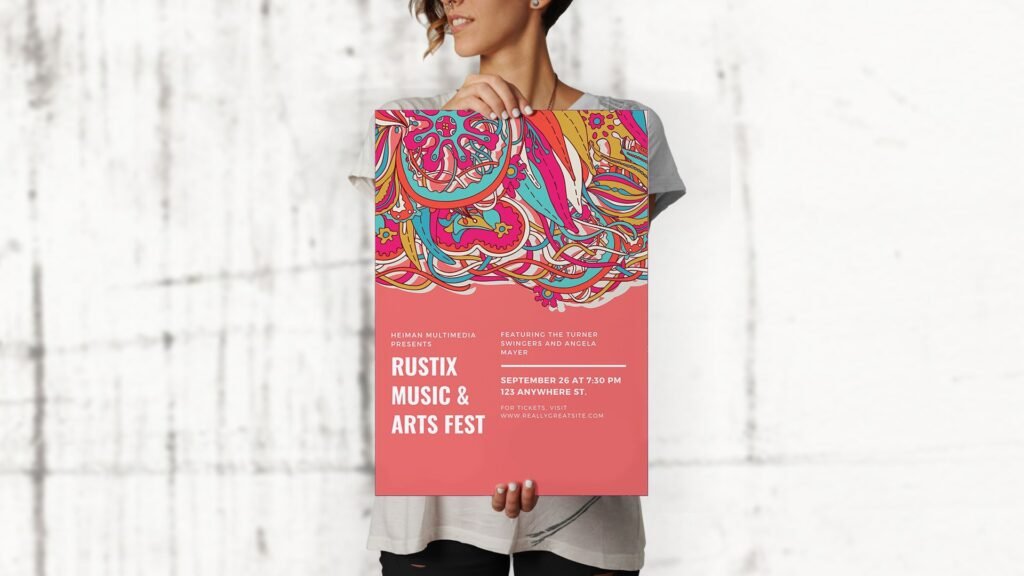

Every great event starts with attention. Whether it’s a local football gathering, a school fundraiser, a supporters’ meetup, a youth tournament, or a community initiative, people need a reason to stop scrolling, look up, and care. That first moment of connection often comes down to something surprisingly simple: how the event is presented visually.
For communities and clubs that thrive on energy and participation, strong design isn’t about looking polished for the sake of it. It’s about making ideas visible. A poster can turn a quiet announcement into a packed room, a casual idea into a shared experience, and a one-off event into something people remember.
Visual tools have changed dramatically in recent years, making creative work more accessible to everyone—not just designers. Platforms that support fast concept creation, layout experimentation, and visual storytelling have made it easier than ever to produce standout content. One example is AI poster creation tools, which help transform rough concepts into polished visuals without requiring advanced design experience. For community organisers, sports groups, and passionate fans managing projects alongside everyday life, that shift has opened up new possibilities.
Why Posters Still Matter in a Digital World
It’s easy to assume posters belong to another era. After all, social media dominates attention.
Yet posters remain one of the most effective ways to communicate quickly.
A good poster creates immediate understanding. In seconds, people know what’s happening, why it matters, and whether they want to engage.
Think about the moments that create excitement around local communities:
- Match screenings
- Charity drives
- Club celebrations
- Youth sports programmes
- Fan gatherings
- Seasonal events
Each of these benefits from visuals that feel purposeful and memorable.
Unlike endless content feeds, posters create a focused message.
The Difference Between Decoration and Communication
One of the biggest mistakes people make when creating promotional materials is trying to fit in too much.
More colours.
More fonts.
More effects.
The result often feels noisy instead of compelling.
Strong posters do something different: they guide attention.
Start with one clear message.
Ask yourself:
- What should someone notice first?
- What action should they take?
- What emotion should they feel?
If someone can’t answer those questions within a few seconds of looking at your design, it probably needs simplifying.
Clean layouts almost always outperform overloaded ones.
Borrow Ideas From Real Matchday Energy
Football communities understand atmosphere better than most.
Think about what creates anticipation before a game:
- Bold visuals
- Clear identity
- Emotional storytelling
- Shared excitement
The same principles work for community communication.
A youth football poster doesn’t need expensive photography.
A local event flyer doesn’t need agency-level production.
Instead, focus on emotional cues:
Movement — dynamic imagery that feels active.
Identity — colours and visual themes people associate with your group.
Clarity — one key message people remember.
Great design isn’t about complexity. It’s about recognition.
Build Around One Story
People connect with stories far more than announcements.
Compare these examples:
Version A:
Community Football Event – Saturday – Join Us
Version B:
Bring the family, meet local supporters, and celebrate the season together.
The second version creates a feeling.
That difference matters.
Before creating any poster, write a one-sentence story.
Examples:
- Celebrate the season with local fans.
- Help raise funds for youth programmes.
- Support the next generation of players.
- Create a day people will remember.
Once that sentence exists, the visual direction becomes much easier.
Practical Design Tips That Actually Work
If you’re creating posters regularly, these habits make a noticeable difference.
Use Fewer Fonts
Two fonts are usually enough:
- One for headlines
- One for supporting information
Anything beyond that often becomes distracting.
Create Visual Hierarchy
People should naturally read in this order:
- Headline
- Key details
- Call to action
If every element feels equally important, nothing stands out.
Design for Mobile First
Many posters today are viewed on phones before they’re seen anywhere else.
Zoom out.
Can you still read the main message?
If not, simplify.
Leave Empty Space
Blank areas are not wasted space.
They help important elements breathe and improve readability.
Consistency Builds Trust
One overlooked advantage of good visual communication is credibility.
When your materials look consistent across events and announcements, people begin to trust the experience behind them.
That doesn’t mean every poster should look identical.
But recurring elements help:
- Similar typography
- Recognisable colours
- Consistent tone
- Familiar structure
Over time, people begin recognising your content instantly.
That recognition creates stronger communities.
Creativity Should Feel Accessible
For a long time, people assumed strong design belonged only to professionals.
That barrier discouraged great ideas.
Today, creative tools have lowered the entry point significantly.
You don’t need years of experience to create something useful.
You need:
- A clear message
- A simple structure
- A willingness to experiment
Start with one event.
Create one poster.
Collect feedback.
Improve.
That process often matters more than perfection.
Conclusion
Posters remain one of the simplest and most powerful ways to bring people together. Whether promoting a football event, highlighting a local initiative, or energising a community gathering, strong visuals help ideas move from intention to action.
The best designs aren’t necessarily the most complex—they’re the ones that communicate clearly, feel authentic, and inspire people to show up. When creativity becomes easier to access, more people get to share ideas that deserve attention—and communities become stronger because of it.